Skip to main content
The source of penicillin (it includes the former P. notatum) and the most widely encountered Penicillium in buildings, where it is one of the main colonisers of water-damaged walls (INSPQ). In mushroom growing, Penicillium (bluish-green mould) is common in the laboratory and turns up in compost and casing. Stamets & Chilton (1983) name P. chrysogenum among its members, but no species-specific reports from mushroom farms were found in this pass.
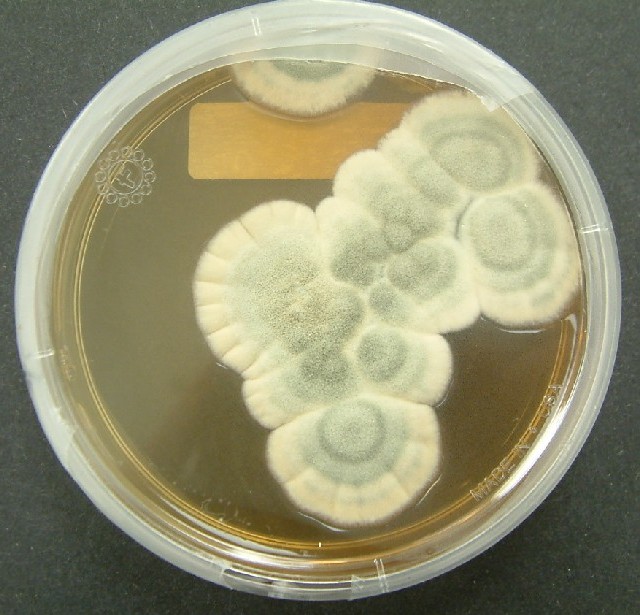
Not edible; a contaminant. It is a strong allergen, listed in one cited source among the four most allergenic fungi. It produces roquefortine C, chrysolysin and other metabolites. Infections are rare and opportunistic: otomycosis, keratitis, endophthalmitis, endocarditis and a few lung and brain cases (INSPQ).
This page grows with the community. Here is what it is still missing:
Join WeMush to log cultivation data, discover strains, and connect with fellow growers.
Join WeMushNever eat a wild mushroom based on a web page — confirm with an expert.
Mycology is an evolving science: names, classifications and safety information change as research advances. Entries are compiled from cited sources and reviewed, but may be incomplete or out of date — check the sources, and never rely on this library alone to identify or eat a mushroom.
